The parcel deposit and the difference the parcel tick can settle
Shipping is paid as a deposit on an estimate and settled after packing. This page follows the deposit both ways, quotes the reason Fansbuy gives for the difference, and separates it from the charges that never go through the permission.
Why the shipping charge starts from an estimated weight
Fansbuy weighs each item when it reaches the warehouse; its order processing answer says weights are usually updated in the morning and inspection photos uploaded in the afternoon. When you submit a parcel, those item weights are the basis for the estimate.
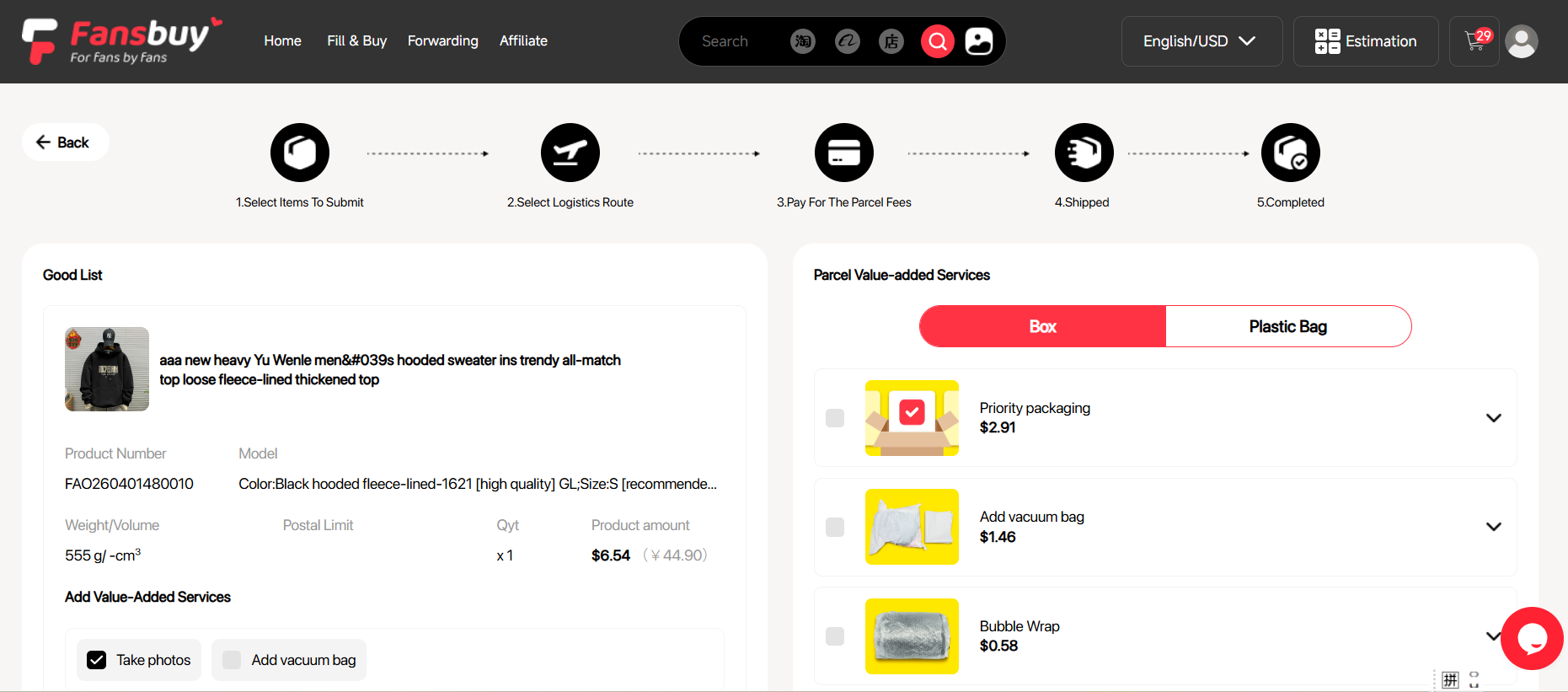
The guide’s step 6 describes what you pay at that moment: the international shipping deposit and the customs declaration fee, plus any packaging preferences and optional insurance you pick. The deposit is an estimate because the box does not exist yet. Packing adds material and, more importantly, gives the parcel a size.
Shipping lines charge by weight, and many also by size, so the real figure is only known once the warehouse has packed and measured the box. See help 804 for the warehouse timing.
When the deposit was more than enough
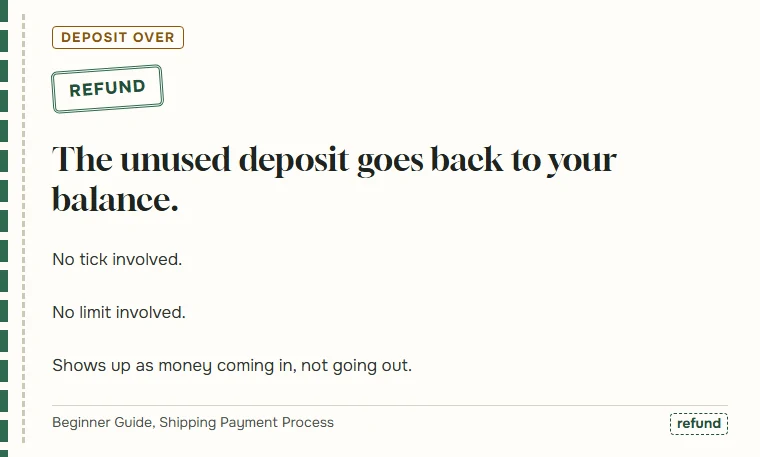
The guide’s Shipping Payment Process starts with the friendly case: if the estimated charge exceeds the actual cost, the difference will be automatically refunded to your account balance.
That refund is not a deduction, so the permission plays no part. The account amount, the parcel tick and your balance level are all irrelevant; the money simply flows back. In practice it appears in your balance records once the parcel is weighed and the line’s price is settled.
The refund stays in the balance, where it can pay for your next order or be drawn on by the permission later. Taking it back out to a card or PayPal is a withdrawal, which has rules of its own covered in our questions page.
When the deposit falls short
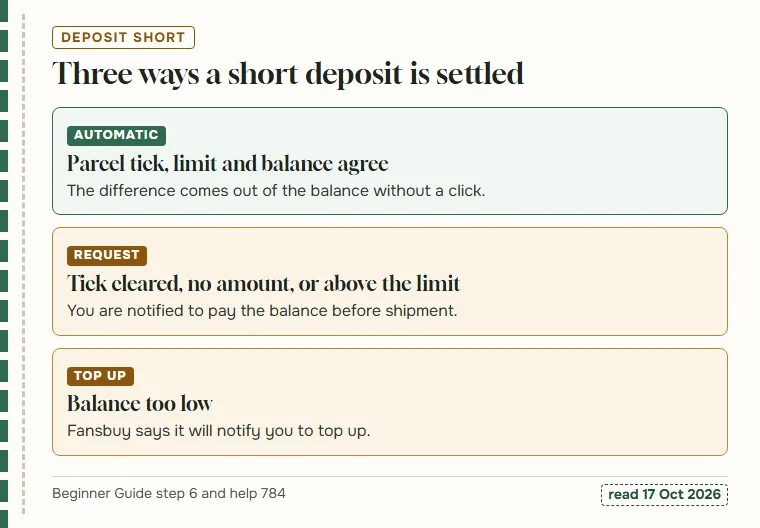
The other case is the one the permission exists for. The guide’s wording is: if the estimated charge is insufficient, you will be notified to pay the balance before shipment. “Balance” here means the remaining amount, not your account balance.
Method 5 changes that for anyone who has set an amount: if the extra is below it and your balance is sufficient, the system deducts it without manual action. In practice, then, a short deposit settles in one of three ways: automatically, as a request to you, or as a notice to top up first.
The guide also offers a way around the estimate: a Rehearsal Package Service, called Preview Package in the warehouse services list at 15 yuan per package, where Fansbuy packs and weighs first and you choose the line and pay the final shipping cost afterwards.
The reason Fansbuy gives on the settings screen
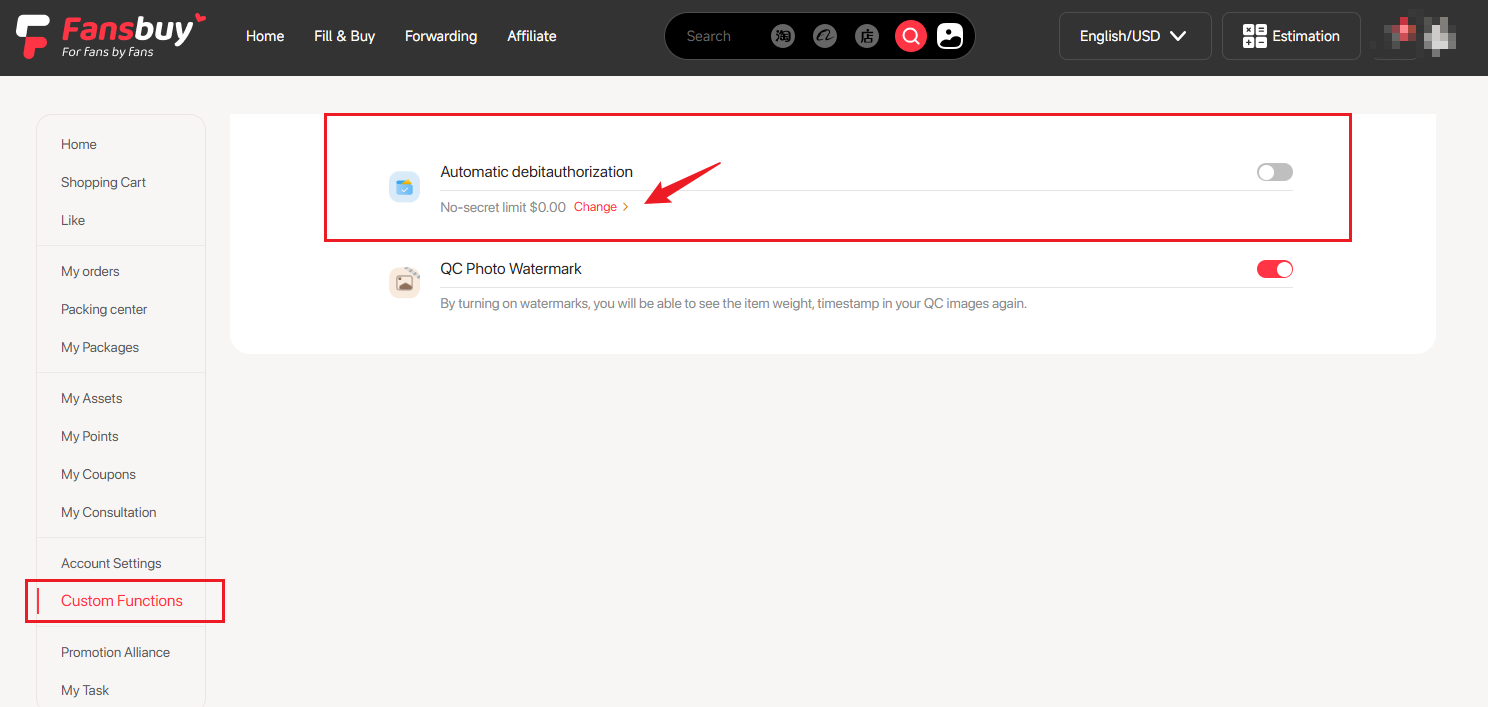
The settings screen gives the parcel side its own heading, Parcel fee adjustment authorization, and its own explanation. It is the only place Fansbuy says in writing why shipping differences happen: the weight, especially volume weight, differs after packaging.
Volume weight is a carrier’s way of charging a light but bulky box as if it were heavier. A padded jacket or a pair of trainers in their box can cost more for its size than for its weight, which is why the parcel side of the permission matters more for some hauls than others. Fansbuy’s service list includes vacuum packaging for exactly that reason.
The rest of the sentence repeats Method 5 in its own words: under the authorised amount, with enough balance, the necessary charges are deducted automatically.
Declaration, customs and duties stay outside it
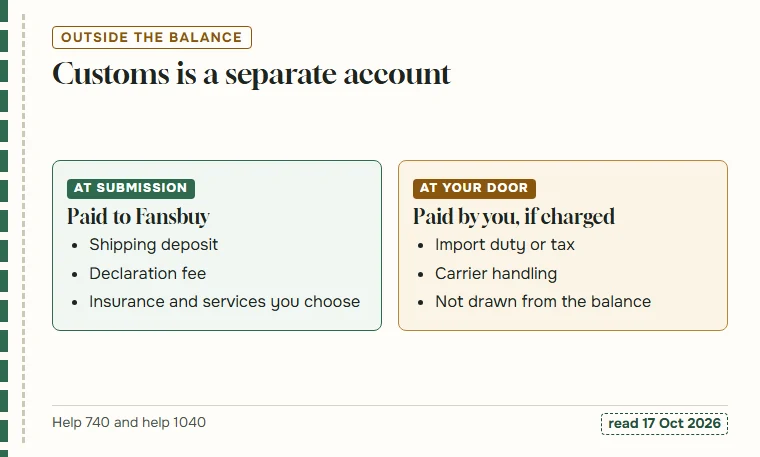
Two more charges sit near the parcel step, and neither belongs to the permission. The declaration fee is paid with the deposit; Fansbuy’s declaration instructions says it declares each parcel according to the shipping line’s requirements and that customs risk rests with the buyer.
Destination tax, duty and carrier handling depend on the jurisdiction, product and line. A value below one duty threshold does not necessarily exempt VAT or a handling charge. Check the current destination rules and whether a specific route prepays any taxes; the wallet permission is not a promise of tax-free delivery.
So the parcel tick reaches one thing only: a shipping cost that comes out higher than the deposit.